Pathway
A student-centered platform designed to help international J1 and F1 students track documents, monitor processing times, and navigate their visa journey with clarity and confidence.
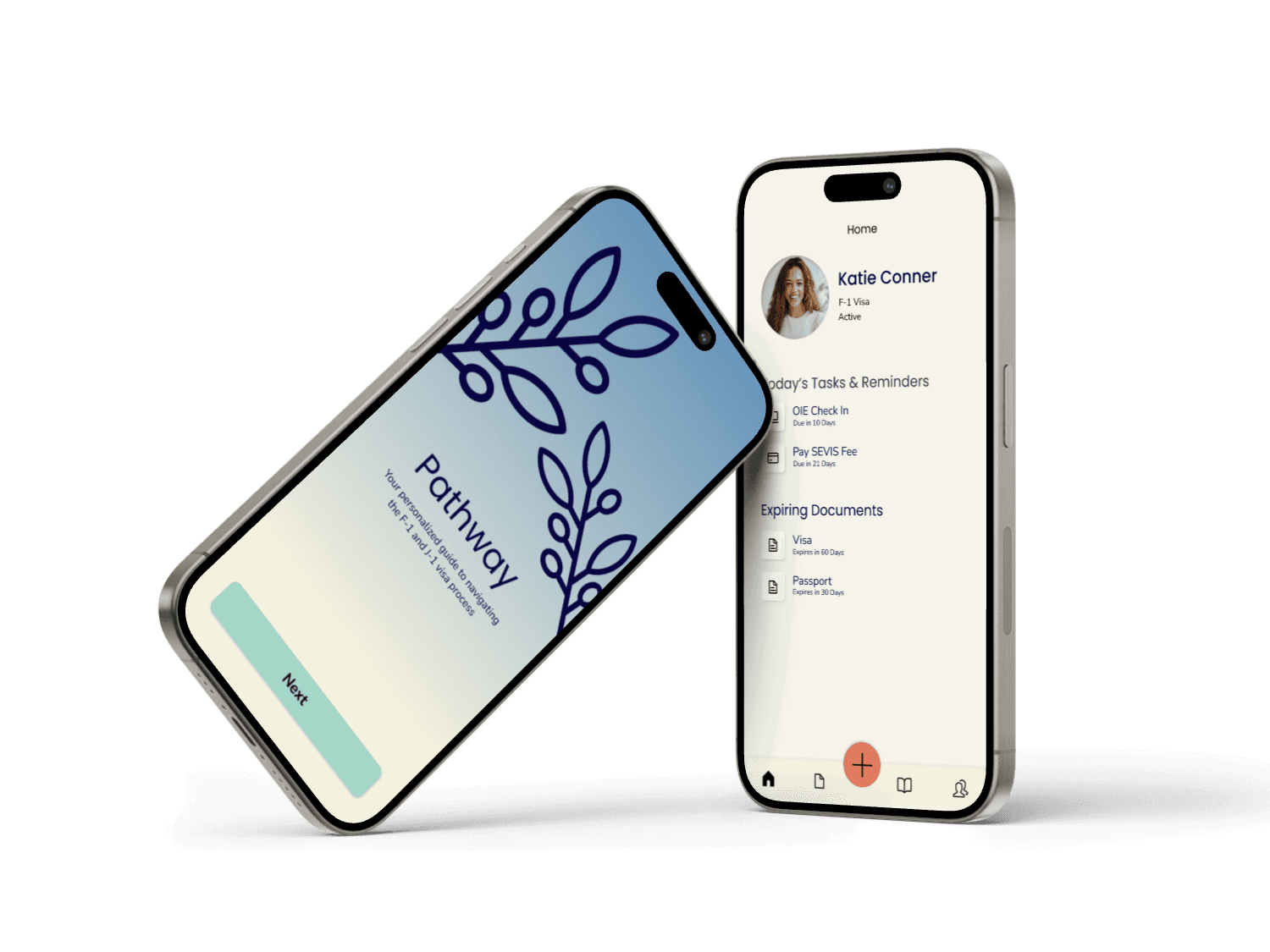
Rapid prototyping, user research, wireframing, experimenting with AI tools in design workflows, high-fidelity mockups
Pathway was a sprint project created to explore how AI tools could support UX/UI design while addressing a real student challenge. The idea came from my role as a student assistant at Georgia Tech’s Office of International Education, where I witnessed firsthand how J1 and F1 students often struggled with missed deadlines, unclear processes, and difficulty tracking their documents. Many completed tasks too late simply because they lacked clear guidance or tools to stay organized.
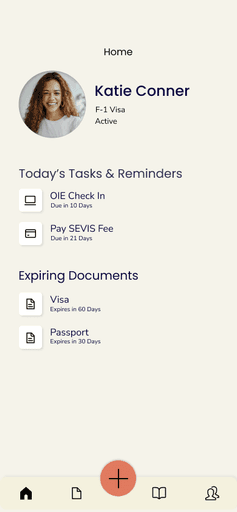
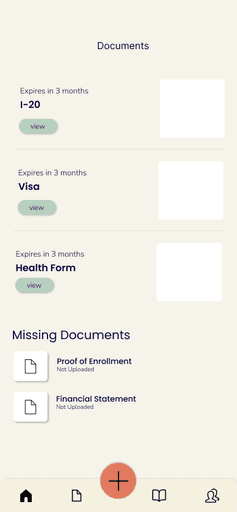
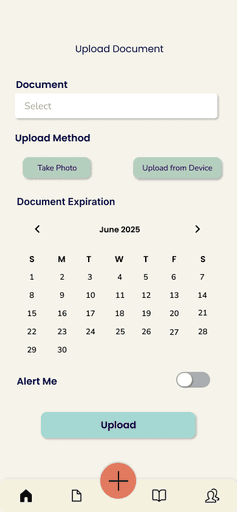
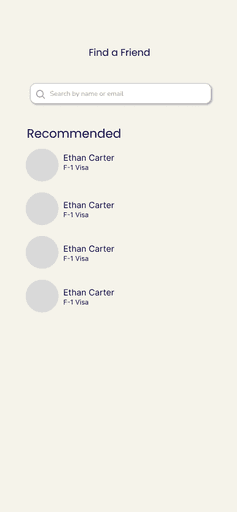
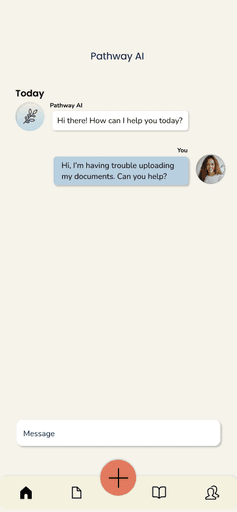
The resulting prototype introduced a student-centered platform that allows users to log their visa type, track document progress, receive reminders, and monitor processing times. The design also included support features like quick reporting of issues and a centralized hub for all visa-related tasks.
Although built in just a week, Pathway highlighted how AI could accelerate ideation and streamline workflows without sacrificing empathy-driven design. The project provided both a proof of concept for a critical student need and a personal exploration of how emerging tools can shape faster, more intentional design processes.
Solo project
1 week (Summer 2025)
Exploratory sprint project focused on concept validation and design experimentation
Overview
The Challenge
My Role
My Role
Understanding the Users
Home Screen
Resources
Key Screens
Takeaways
For the Future
Home Screen
Document, Document Upload
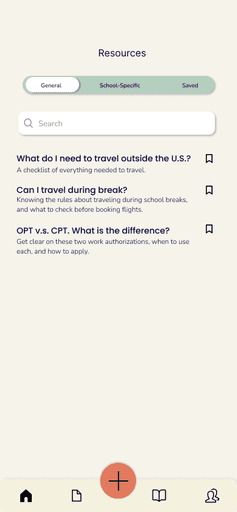
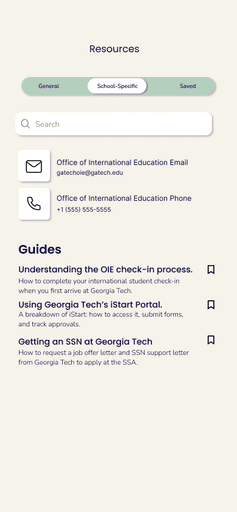
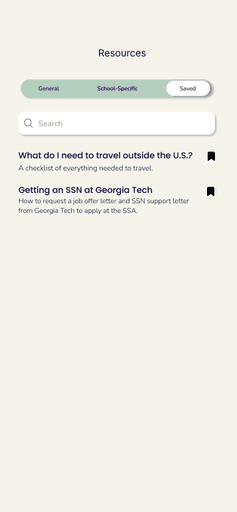
Resources
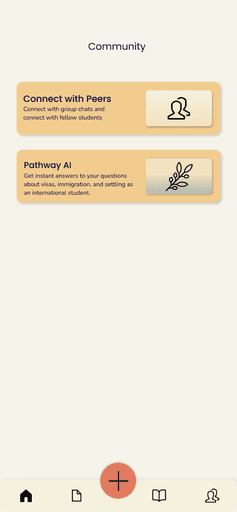
Community (Connect with Students & PathwayAI)
My Wireframe
Stitch AI
Team
Timeline & Status
Summary
UX/UI Designer
Navigating the visa process as an international J1 or F1 student can be overwhelming. At Georgia Tech, students often struggle to keep track of documents, deadlines, and requirements, leading to unnecessary delays and stress.
Since this was a one-week sprint, I wasn’t able to interview as many students as I had hoped. I spoke with one international student at Georgia Tech, whose perspective shed light on the broader challenges J1 and F1 students face when navigating their visa process. Their experience revealed how a lack of clarity and limited resources can create unnecessary stress. From this research, international students want:
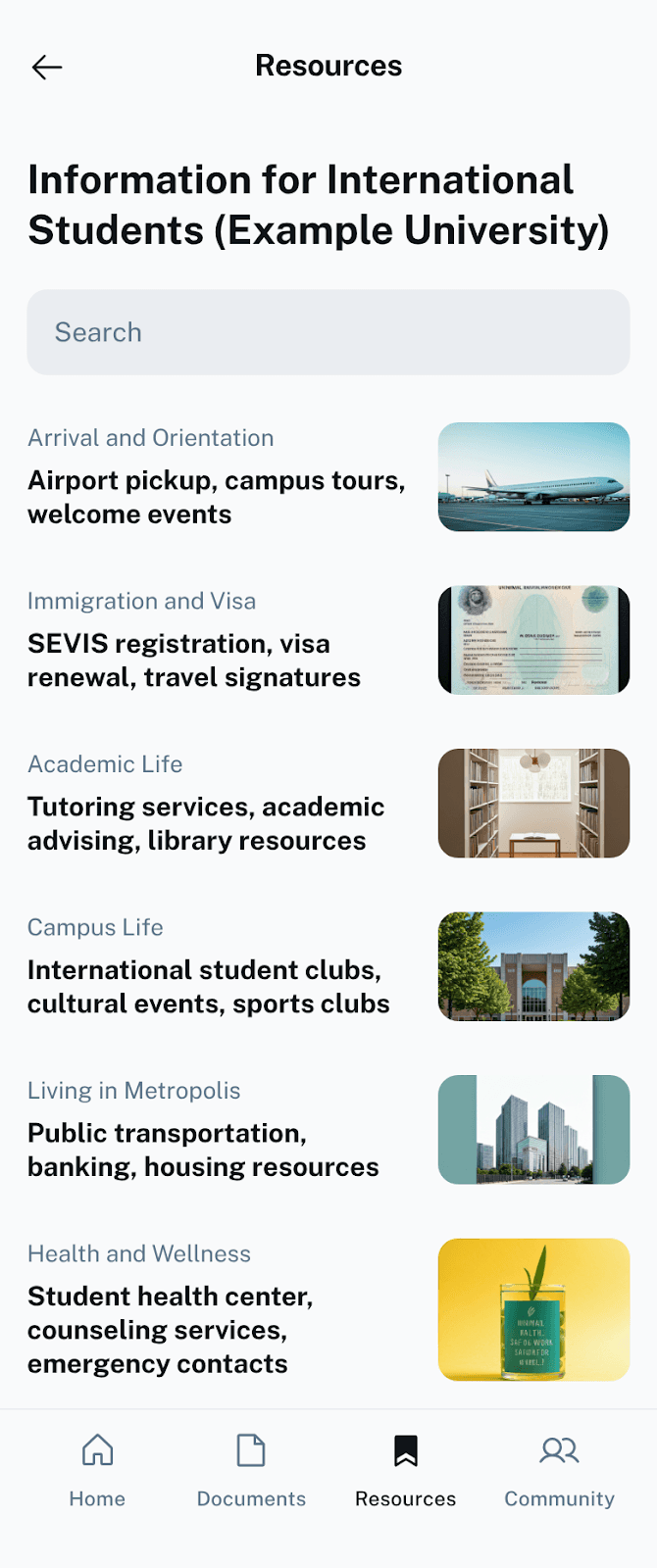
I moved directly into grayscale wireframes to focus on hierarchy and usability, skipping detailed flows to save time in the sprint. To push my ideas further, I experimented with Stitch AI, which generated high-fidelity versions of my wireframes. While not production-ready, they offered fresh perspectives that helped me think differently about layout and navigation.
Key takeaways from using AI in my process:
Faster iteration on design ideas
Sparked new layout and content placement directions
Provided alternative perspectives beyond my first draft
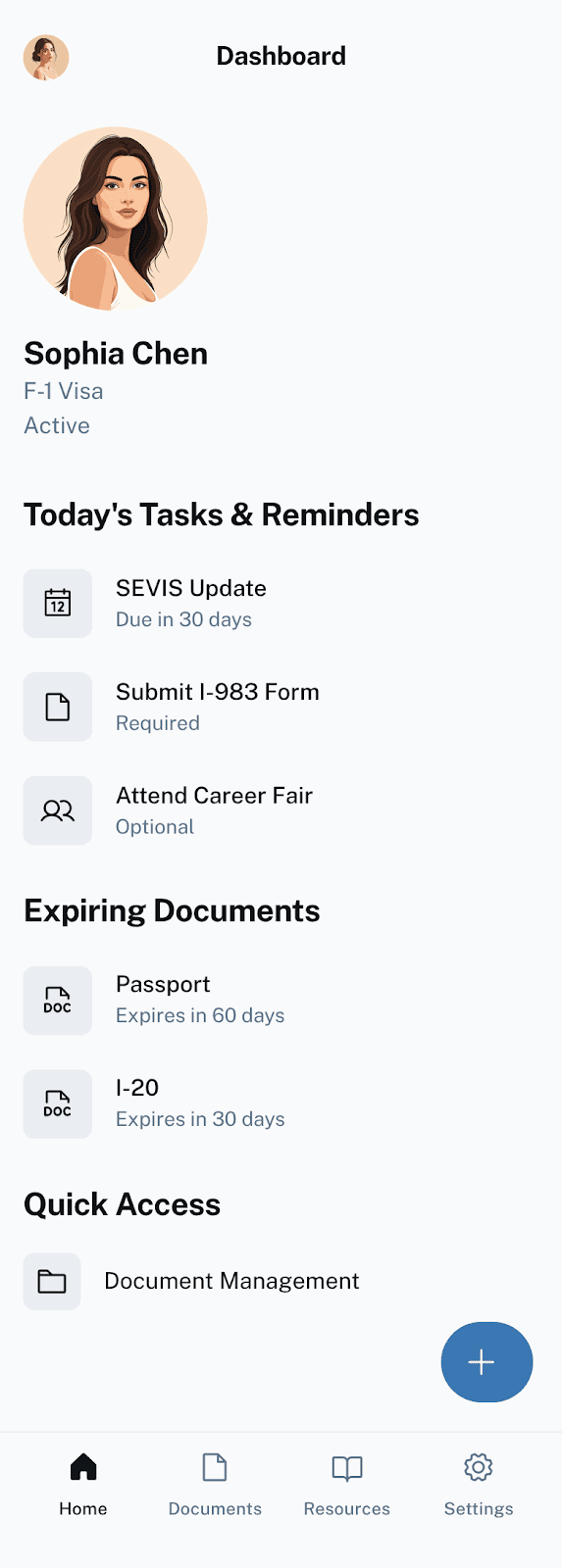
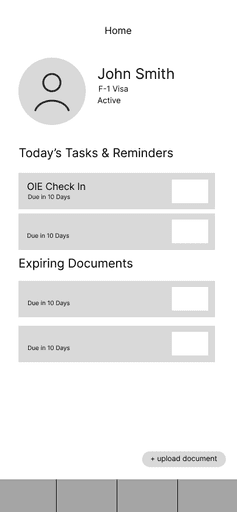
My wireframe captured the core structure, but Stitch AI’s version revealed how cleaner hierarchy, spacing, and grouping could make the screen easier to navigate.
The AI output pushed me to think beyond grey boxes, showing how small visual details like typography and icons can elevate clarity and usability.
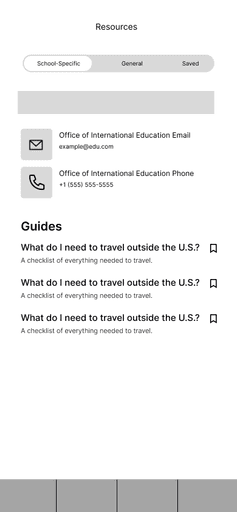
My wireframe kept the focus on actual university resources, including direct contact information and guides, which made the page more practical for international students.
I preferred the clarity of separating resources into school-specific, general, and saved lists, which gave students flexibility while staying organized.
Since this was a one-week sprint focused on exploring AI in the design process, the high-fidelity screens are not fully refined. Instead, they capture key flows and demonstrate how AI tools like Stitch influenced my design direction.
Unclear Timelines
Students often don’t know when specific steps need to be completed, causing delays in submission or late fees.
With multiple forms and offices involved, students often lose track of what’s submitted, pending, or approved.
Resources are scattered and inconsistent, leaving students without a clear, centralized place to understand requirements.
Tracking Difficulties
Fragmented Guidance
Goal
My goal was to design a clear, student-centered platform that simplifies the visa process for international J1 and F1 students. By centralizing timelines, document tracking, and resources into one digital tool, the platform empowers students to stay on top of requirements with confidence while reducing stress and uncertainty.
Research
& Insights
Wireframes
& AI Exploration
High Fidelity
Designs
Reflection
Clear, centralized information
Timeline awareness
Accessible
support
My Wireframe
Stitch AI
My Wireframe
Stitch AI
My Wireframe
Stitch AI
"Work with AI, not against it!" : Exploring AI tools alongside traditional wireframing gave me new ways to think about layout and design decisions, even when I didn’t adopt the AI’s version.
A one-week sprint forced me to prioritize clarity and functionality over polish, which taught me how to scope quickly and still deliver value.
Designing around real challenges I’d seen in my role at the Office of International Education reminded me that even small improvements can reduce stress for users navigating complex processes.
Conduct additional user interviews to validate assumptions and gather broader perspectives.
Expand high-fidelity designs to cover more edge cases and interactions.
Test AI-generated design suggestions more systematically to understand where they can best accelerate workflows.
Add features for better advisor-student communication, such as secure chat or timeline syncing with official university portals.
SS